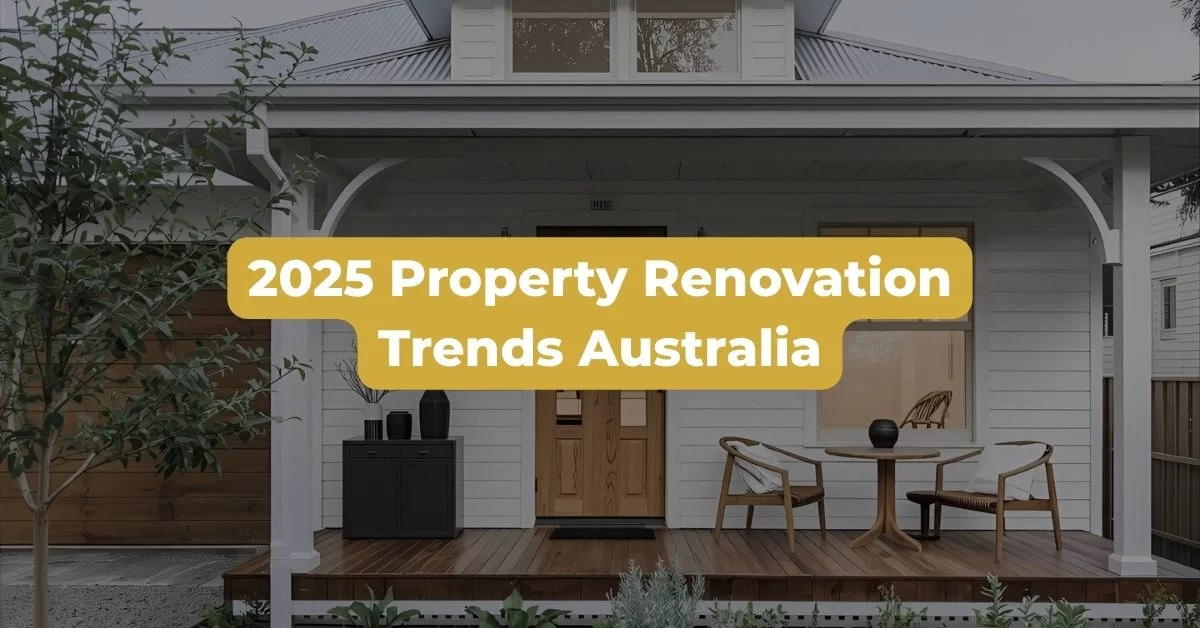
Why renovation is booming in 2025
Australia’s renovation market is at record strength.
With new-build approvals at 40-year lows and rising material costs, investors are focusing on upgrading existing homes instead of building from scratch.
- Renovation spending is up 6.5% year-on-year (ABS 2025)
- Renovations now account for 40% + of residential construction (KPMG 2024)
- Forecast market value: A$54 billion + in 2025
As KPMG and the HIA both report, renovation has become the most active segment of the residential construction market, driven by limited housing supply, sustainability goals, and buyer preference for established locations.
State-by-state renovation insights for investors
New South Wales (NSW)
Renovation remains at record levels, especially in Sydney’s inner and middle-ring suburbs where owners extend or re-configure rather than relocate.
- Alterations & additions up ~6% YoY (ABS 2025)
- Tight stock and high land costs make reno the go-to value-add play
Investor takeaway: Focus on space-maximising upgrades, dual living setups, and smart cosmetic refreshes.
Victoria (VIC)
Victoria’s staged adoption of NCC 2022 energy and livability standards is reshaping renovation scopes.
- More upgrades for insulation, glazing and thermal comfort
- Strong pipeline in heritage suburbs constrained by overlays
Investor takeaway: Compliance-aligned energy and accessibility updates offer future resale advantage.
Queensland (QLD)
Renovation demand remains high across Brisbane and coastal corridors.
- Mix of lifestyle renos (kitchen, bath, outdoor) and climate-resilience projects
- Population growth continues to lift rental and resale demand
Investor takeaway: Look for flood-resilient upgrades and potential for secondary dwellings or granny flats.
Western Australia (WA)
WA continues to outperform in new builds — but renovations are surging too.
- Families upgrading existing homes in growth corridors
- Strong migration inflow driving demand for modernised stock
Investor takeaway: Family-layout optimisation and energy-efficient retrofits deliver strong ROI.
South Australia (SA)
SA’s rule change allowing granny flats to be rented to non-family members opened the door for dual-income strategies.
- Investors adding studios and converting garages
- High yield potential with lower entry prices
Investor takeaway: Target small-lot sites where secondary dwellings are feasible under local council rules.
Tasmania (TAS)
Tasmania’s renovation focus is thermal comfort and moisture control rather than large-scale rebuilds.
- Window and insulation upgrades dominate
- Cost-efficient energy retrofits in demand
Investor takeaway: Prioritise affordable energy-saving upgrades to attract eco-conscious tenants.
Australian Capital Territory (ACT)
ACT leads Australia in electrification incentives and green retrofits.
- Rebates for solar, heat-pump systems and energy-efficient appliances
- Demand for “green homes” outpacing older housing stock
Investor takeaway: Include sustainability and comfort upgrades in every investment plan.
Northern Territory (NT)
Renovation activity here focuses on climate durability and ventilation, not purely cosmetics.
- Works guided by cyclone and heat-resilience standards
- Limited supply keeps demand high for quality dwellings
Investor takeaway: Focus on long-life materials and energy-efficiency improvements.
Australia-wide renovation trends for 2025
1. Secondary dwellings & granny flats
Granny flats remain the number-one yield-booster. SA’s 2023 rule change and NSW/QLD’s flexible zoning keep demand strong.
2. Energy-efficiency & electrification upgrades
Heat-pump systems, induction cooktops, insulation and solar-readiness are now mainstream — cutting bills by up to 90%.
3. Climate resilience retrofits
Flood-resistant flooring, raised structures, and fire-safe materials are now standard inclusions for northern and coastal states.
4. Kitchen & bathroom overhauls
Still the strongest value-add areas — essential for resale appeal and rental demand.
5. Smart space re-planning
Clever internal re-designs (ensuite additions, study nooks) beat costly extensions.
6. Outdoor living & low-maintenance landscaping
Decks, alfresco areas and composite materials remain high-ROI upgrades, especially in QLD, WA and NSW.
7. Accessibility & livable housing design
Step-free showers, wider doorways and circulation space are gaining traction with aging demographics.
8. Cosmetic refresh + material simplification
Paint, flooring, lighting and joinery updates still provide fast, affordable uplift.
9. EV-ready & solar-ready homes
Including EV-charging conduits and battery-ready wiring adds future appeal.
10. “Reno-instead-of-move” trend
With approvals down and build times long, Australians are staying put and upgrading. Renovation work up 6.3% YoY (ABS 2025).
Bonus 2025 Trend: Wellness-focused design — natural light, air-quality control, and “emotional architecture” spaces are rapidly growing in buyer appeal.
Key takeaways for investors & homeowners
✅ Renovation is now the dominant form of residential investment in Australia.
✅ Efficiency, resilience, and liveability upgrades deliver both capital growth and rental uplift.
✅ Investors who integrate energy-smart and space-optimised design gain the biggest edge.
🔗 Source highlights (2024–2025)
- KPMG (2024): Renovation spending up 6.5%, new builds down 14%
- ABS (2025): Alterations & Additions + 6.3% YoY
- HIA (2025): Reno sector = 1/3 of all residential labour demand
- The Guardian (2024): Renovations at 40-year highs
- API Magazine (2025): Energy-efficient homes top profitability list